Safe Steps, Accessible Spaces: LC Sign’s “The Touchpoint Initiative”
Walls may be silent, but fingertips can speak volumes. […]
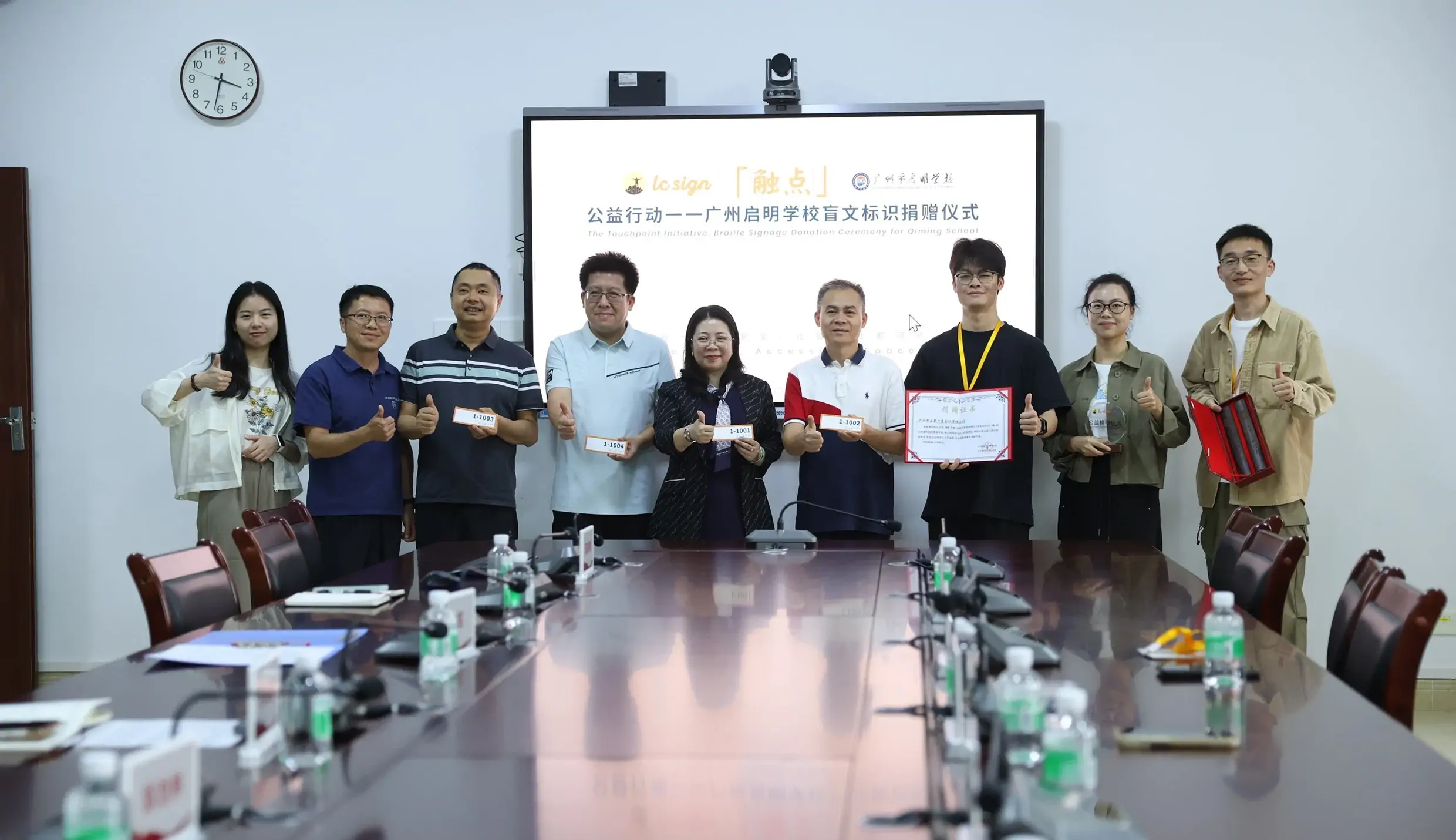
Walls may be silent, but fingertips can speak volumes. When visually impaired students struggle to find their way across campus, LC Sign responds with thoughtful, human-centered design—transforming braille signage into a “second pair of eyes.” This is the core mission of our The Touchpoints Initiative: to empower an invisible world through tangible design.
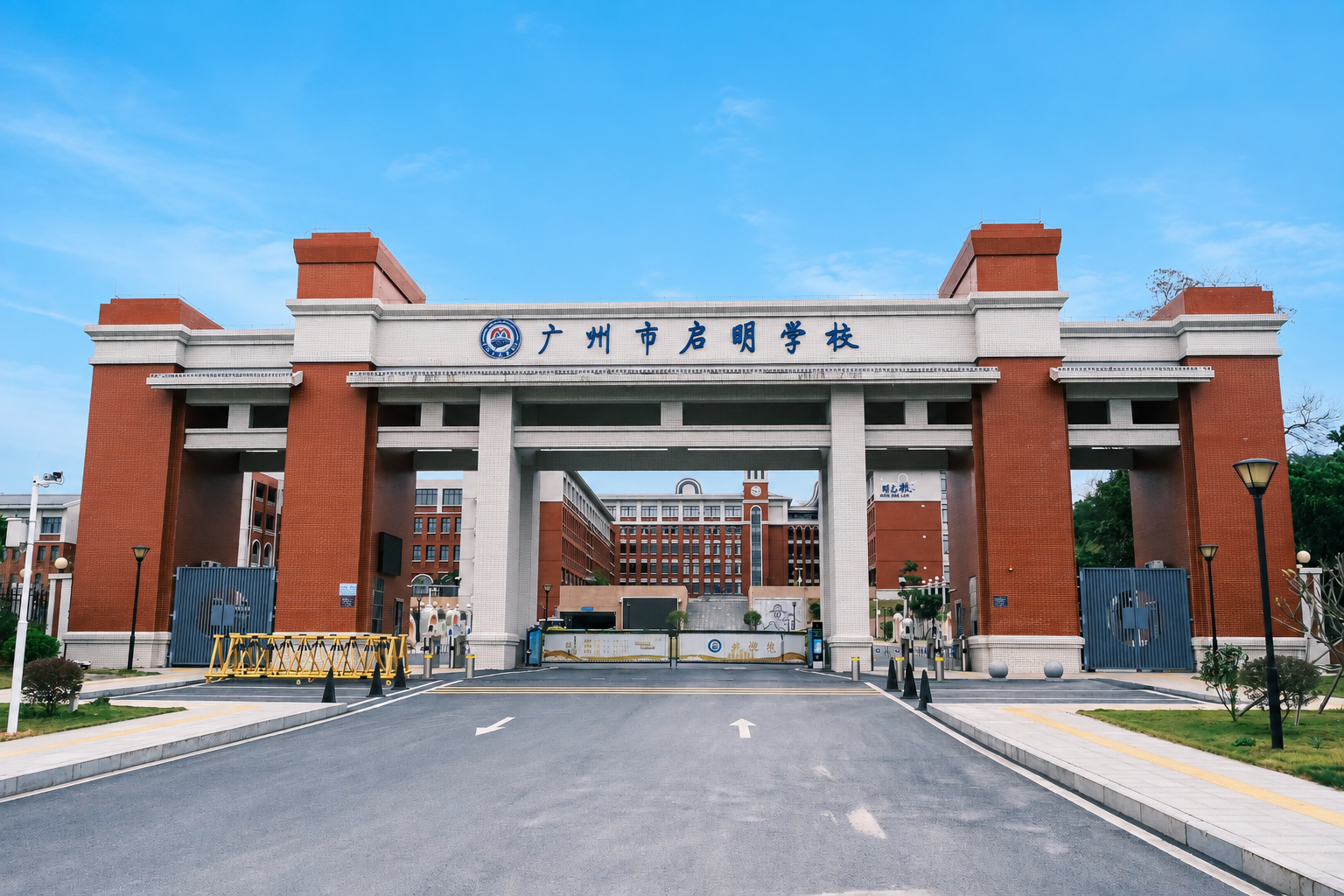
The campus of Qiming School has a complex layout. Most visually impaired students rely heavily on memory and auditory cues to navigate. When the environment becomes noisy or unfamiliar, they are often left tracing walls slowly with their hands—or forced to stop and wait for assistance.
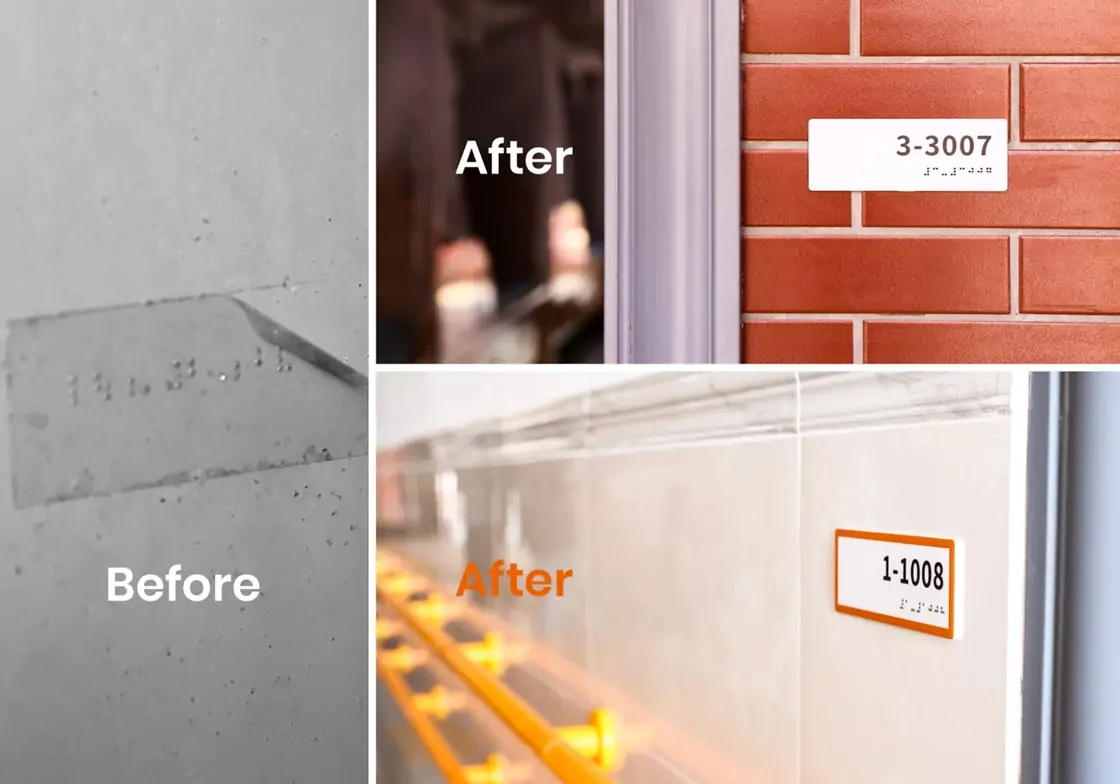
The challenge is further compounded by outdated braille signage. Previously installed signs were made of low-durability materials, with shallow, worn-out dots that became increasingly difficult to read over time. Even when students located a sign, they could not always clearly identify where they were. Independent mobility, in many cases, required courage.
Rather than offering a one-time donation, LC Sign chose to respond with expertise—addressing real needs with precision, and safeguarding dignity through design.
Our team worked on-site at Qiming School, carrying out a comprehensive implementation process:
- Full-pathway analysis— mapping routes across classrooms, dormitories, corridors, and stairwells, while measuring optimal installation heights and tactile angles;
- In-depth interviews with special education teachers to understand daily movement patterns and braille usage habits;
- Co-design with visually impaired consultants, ensuring that real users guided every critical design decision.
Compared to conventional braille signage, we introduced several key improvements:
- Material upgrade:We selected thickened acrylic for enhanced durability and resistance to wear, ensuring that tactile clarity remains consistent over years of use;
- Visual enhancement: High-contrast yellow borders break the monotony of the walls—serving as a continuous visual cue, like a strip of sunlight in the corridor, helping low-vision students orient themselves quickly;
- Optimized installation height:Moving beyond generic standards, we set the height at 1.1 meters—determined through repeated testing. This allows natural arm positioning during tactile reading and minimal visual adjustment when viewed, creating equal comfort for both touch and sight.
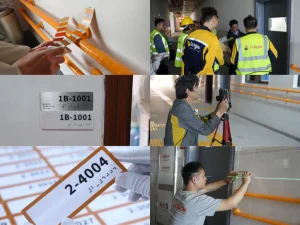
Every braille dot—its height, diameter, and spacing—was carefully tested and calibrated. In total, 631 signs were produced and installed, each meeting optimal tactile readability standards. These are not just 631 signs, but 631 confirmations of “I am here.”
Throughout production, we documented the entire process—from material cutting and braille embossing to coating, quality inspection, and packaging. Each sign was individually checked by hand to ensure clarity and consistency.
During installation, our team precisely positioned, mounted, and secured every sign, followed by on-site acceptance with the school. Side-by-side before-and-after documentation clearly shows the transformation—from unmarked spaces to fully navigable, touch-accessible environments.
“The most noticeable change is that the students walk faster,” said Ms. Wu, a teacher at Qiming School. “I’ve observed that when they touch the signs now, their movements are decisive. A single touch is enough to confirm their location, and they continue walking immediately. They no longer hesitate or double-check as before. This shift—from ‘searching’ to ‘knowing’—shows that the system is truly working.”
Starting from Qiming School, LC Sign’s “Touch Points initiative” aims to deliver three long-term values:
- A scalable model for inclusive wayfinding, extending from educational environments to healthcare, transportation, and other public spaces;
- Open technical practices and standards, advancing braille signage from “functional” to “intuitive,” and aligning China’s accessibility solutions with global standards;
- Integration of inclusive design into the full product lifecycle, working with global partners to build a responsible supply chain where business value and social impact grow together.
“Great signage should be a bridge to independent living—not merely decoration,” said Tony Zhu., CMO of LC Sign. “Touch Points is about driving real social progress, not just hardware donations. The Qiming School project proves that when innovation meets empathy, independent mobility becomes not an aspiration, but a daily reality.”
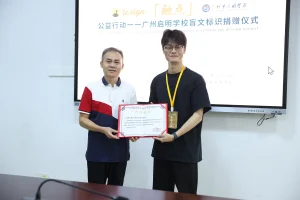
As global expectations for supplier social responsibility continue to rise, LC Sign is committed to combining craftsmanship with long-term social value. Together with our partners—grounded in capability and driven by care—we strive to build a more responsible and inclusive future. The touchpoints are set. The path forward is illuminated.
Contact LC Sign to discuss accessible signage solutions for your projects and communities.